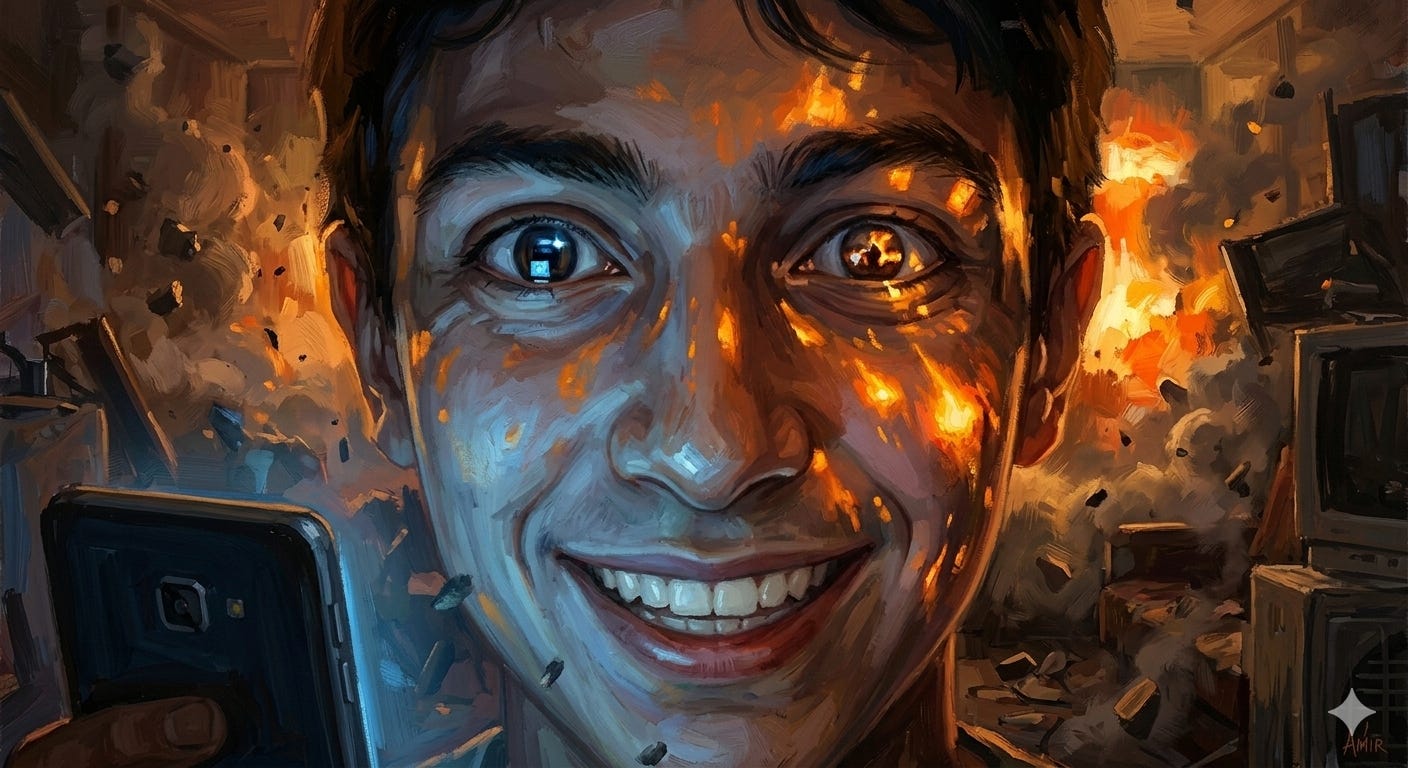
lag zero
the internet legend who hacked the stars

Amir pushed away from the dinner table, the scent of saffron-stained rice and the sharp, lingering tang of sumac still on his breath. His mother’s voice trailed after him—something about tea—but he was already out the door.
Only 17, he lived on the sixth floor of a apartment block in southern Tehran, and hadn’t played Call of Duty in three years.
Not because he stopped liking it but because the internet stopped existing.
The regime had pulled the plug again.
Mobile data gone. Fiber dark. Even the VPNs people whispered about on Signal were choking on whatever new filter they installed overnight. Amir’s American cousin, Ryan (second-gen Iranian-American, called every Nowruz with bad Farsi), had been begging him to “just get online, bro—we’ll squad up.” But how?
Amir had the dish. Everyone in his building knew someone who knew someone. It arrived last year via a cousin’s suitcase from Dubai, wrapped in clothes like contraband.
Starlink.
Illegal as hell—ten years in prison if they caught you—but the rich kids in the north had them first, then the black market prices dropped when more started showing up.
Amir’s was hidden on the roof under a tarp, pointed vaguely skyward. He’d tried it once. Got a few minutes of connection before the signal dropped like a rock. Jamming, everyone said. Regime trucks with antennas driving around neighborhoods, frying the GPS and RF. 80% packet loss.
Unplayable.
But tonight was different.
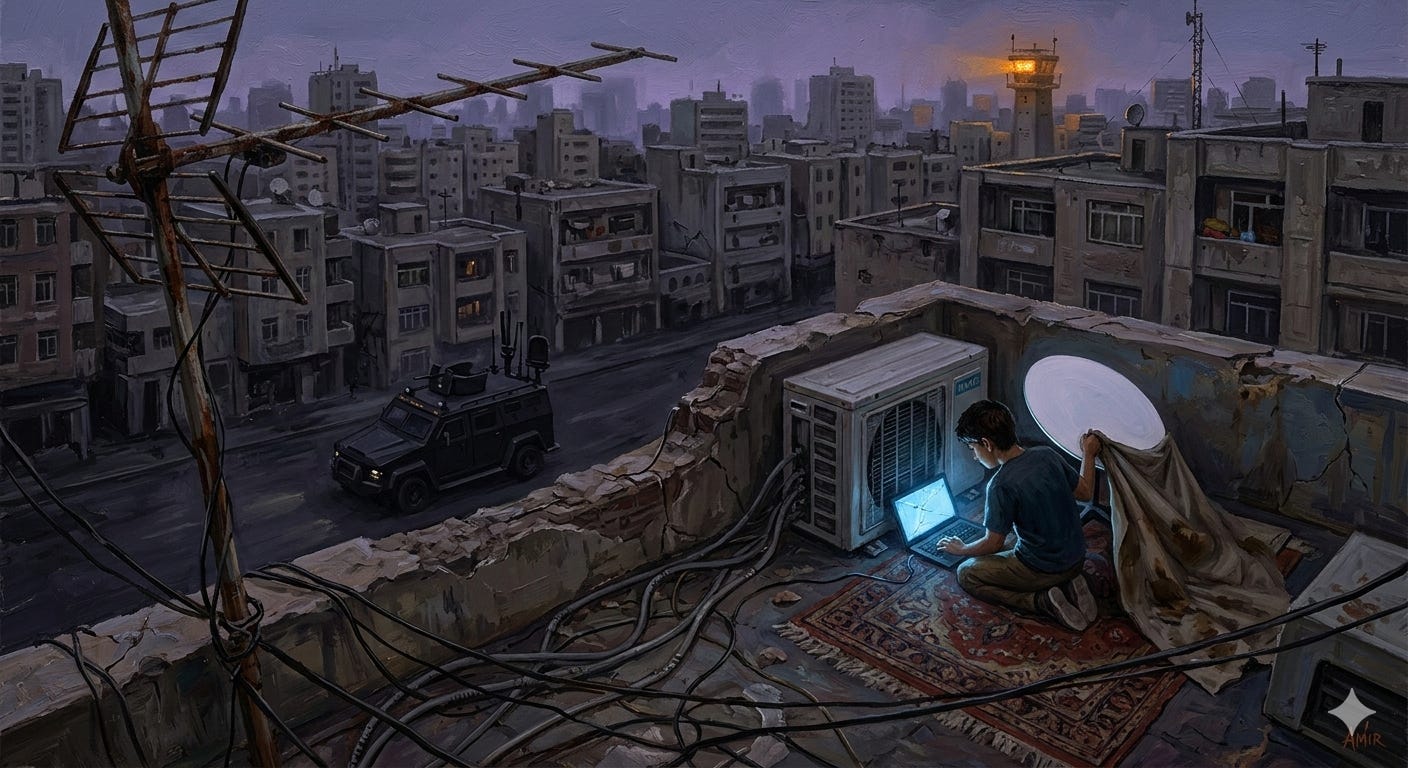
The Roof: The Altar of the Dish
Amir took the final flight of stairs in a lung-burning sprint. The roof door groaned, yielding to the humid, smog-choked air of a Tehran midnight. He wasn’t supposed to be here—not after the 10 p.m. signal-curfew—but the silence of the city felt different tonight.
Below him, the capital was a dark circuit board. The regime had pulled the plug again. Mobile data was a memory; the fiber lines were dark veins in the earth. Even the VPNs people whispered about on Signal—the “Golden Keys” and “Shadow-Tunnels”—were choking on whatever new deep-packet filter they’d installed overnight.
Amir’s mind flashed to Ryan in Long Beach. His cousin, with his “bad Farsi” and effortless high-speed life, had been begging him for months to just get online, bro. But in Tehran, “getting online” was a felony.
He moved toward the shadows near the HVAC unit. His dish was there, tucked under an oil-stained tarp like a dead animal. It had arrived a year ago, smuggled in a cousin’s suitcase from Dubai, wrapped in layers of laundry to hide the sleek, illegal curves of the Starlink phased array. Ten years in Evin Prison if they caught him with it—a heavy price for a low-ping connection.
He peeled back the tarp. The dish stared vaguely skyward, a clean white tile in a city of gray concrete. He’d tried it once before, but the connection had dropped like a stone. Jamming, everyone said.
The Frequency Management trucks were always prowling, their heavy antennas frying the GPS and RF bands until the packet loss hit 80%. Unplayable. Suicide.
But tonight, the bruised violet sky felt strangely clear. No rotating amber lights of the patrol towers were pointing his way.
He knelt, his hands shaking as he plugged the router into the scavenged e-bike battery. The status light flickered. Red. Searching. Then, a soft, steady pulse of white.
“Come on,” he whispered, the ozone smell of the city sharp in his nose. “Talk to me.”
The light didn’t fade.
It didn’t stutter. It held.
He didn’t wait to see if it would last. He grabbed the gear and retreated down the stairs, back through the fog of ghelyoon smoke and the scent of fried onions, retreating into the safety of his room to see if the ghost was real.
The app opened—normally it said “Offline” or “Obstructed.”
Tonight it just... connected.
Ping: 48 ms. Download: 180 Mbps. Upload: 22 Mbps.“What the hell?” he whispered.
No announcement. No news on Telegram. Just... working.
He opened Discord first—Ryan’s server. Message sent: “Bro. I’m in.”
Ryan replied in 3 seconds: “NO WAY. VOICE. NOW.”
They hopped in a voice channel. Amir laughed so hard he almost dropped the laptop. “It’s like 2019 again. No lag. I can actually headshot you.”
Ryan: “Dude, you’re famous in the clan. They think you’re a myth. ‘Persian ghost who never shows.’”
Amir spent the next hour in a private match, just messing around. Ryan kept asking how. Amir didn’t know. “It just turned on. Maybe a glitch. Maybe they forgot to jam tonight.”
But he was curious.
He opened the Starlink debug page (buried in the app settings). Signal stats looked normal, but there was a new firmware version—“v2026.03.01-hotfix-global.” He hadn’t updated it. It just... happened.
He poked around forums (the ones that still loaded via the satellite link). People in border towns were whispering the same thing: “Mine woke up too.” No one knew why. Some said hackers. Some said Musk. Some said aliens. Amir didn’t care. He cared about 0 ping.
Then he noticed something weird in the router logs. Occasional micro-drops—30-80% packet loss for 2-3 seconds—then recovery. Like the regime was still trying to jam, but failing.
He remembered old Reddit threads from Ukraine: people talking about “frequency hopping” or “beam steering” tricks to dodge jammers. Starlink satellites switch beams fast; if you can lock onto a clean one...
He opened his code editor (he was a sysadmin before the blackouts killed his job). Nothing fancy—just some Python he used to mess with network scripts.
He wrote a quick script to monitor latency and auto-reconnect if a beam started dying. Pseudo-code version he sketched:
# Amir’s “Don’t Get Jammed” Helper (just a toy, don’t actually run this)
import time
import subprocess  # pretend this talks to the Starlink API somehow

def check_latency():
    # ping google or something
    result = subprocess.run([”ping”, “-c”, “1”, “8.8.8.8”], capture_output=True)
    if result.returncode == 0:
        latency = float(result.stdout.decode().split(”time=”)[1].split(” ms”)[0])
        return latency
    return 9999  # super high = dead

current_beam = “unknown”
while True:
    lat = check_latency()
    if lat > 200:  # jammed or dying beam
        print(”Beam dying! Forcing re-acquire...”)
        # pretend command: tell dish to hunt for better satellite
        subprocess.run([”starlink-cli”, “reacquire”])  # fictional
        time.sleep(10)  # wait for new lock
    else:
        print(f”Good beam! Latency: {lat} ms”)
    time.sleep(5)
He laughed. “It’s not hacking Starlink. It’s just... nagging the dish to try harder when the bad guys try to mess with it.”
He shared the snippet on a private Discord with Ryan. “If it ever dies again, run this. Maybe it helps.”
Ryan: “Bro you’re a legend. But seriously—people need this. Not for Call of Duty. For... everything.”
Amir paused. He thought about his sister in Shiraz, cut off from her university classes. His mom who couldn’t video-call her sister in Canada. The videos he’d seen before the blackout—people in the streets, then silence.
He wasn’t brave. He wasn’t a revolutionary. He just wanted to play games and talk to his cousin or Layla.
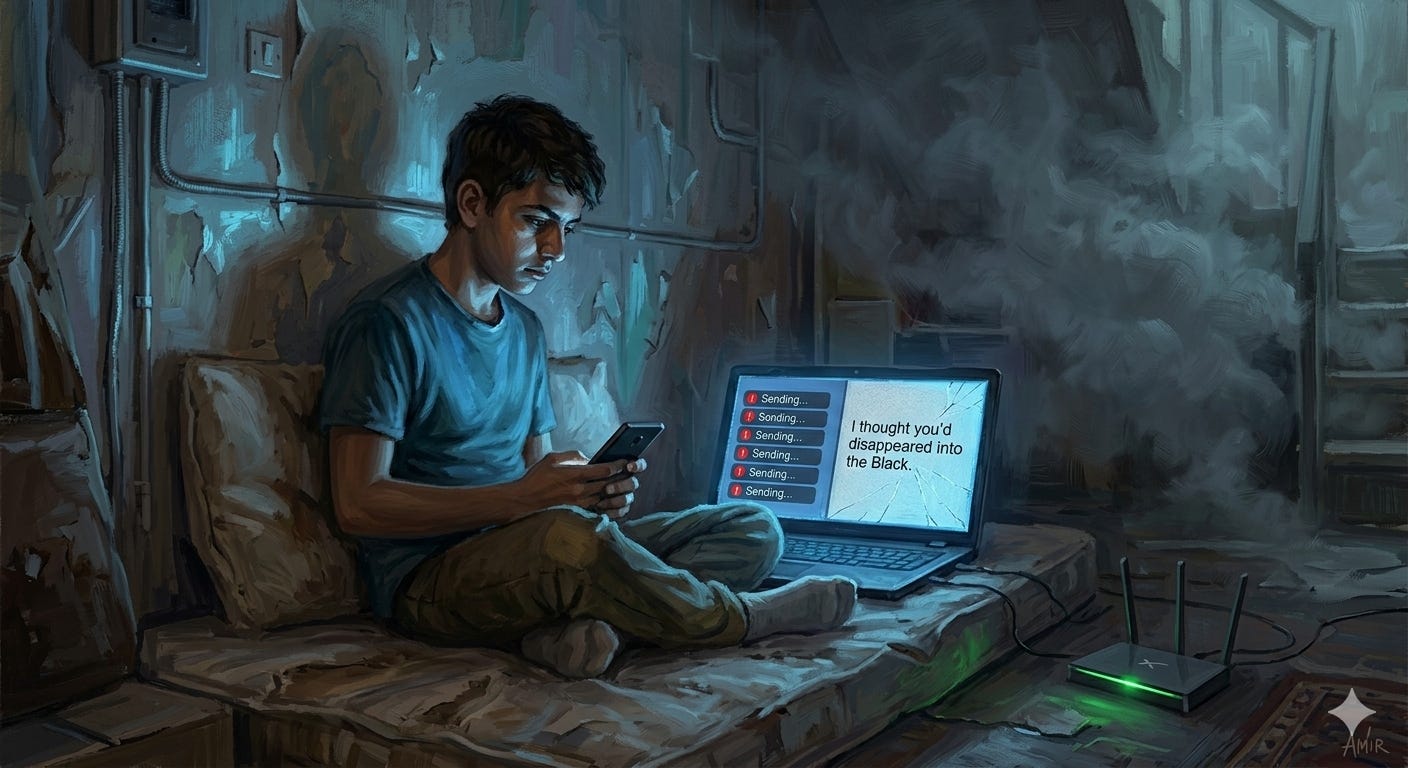
Amir’s Discovery Night
Amir stared at the speed test again: 320 kbps down, 80 up. Barely faster than the dial-up his dad used to curse at in 2005. But it was working. No VPN needed. No Tor browser lag. Just… internet.
He opened WhatsApp first. Layla’s last message was from three weeks ago: “Are you safe? Call when you can.” He typed back: “I’m okay. Internet came back a little. Love you.” Sent.
The crazy thing was it worked.
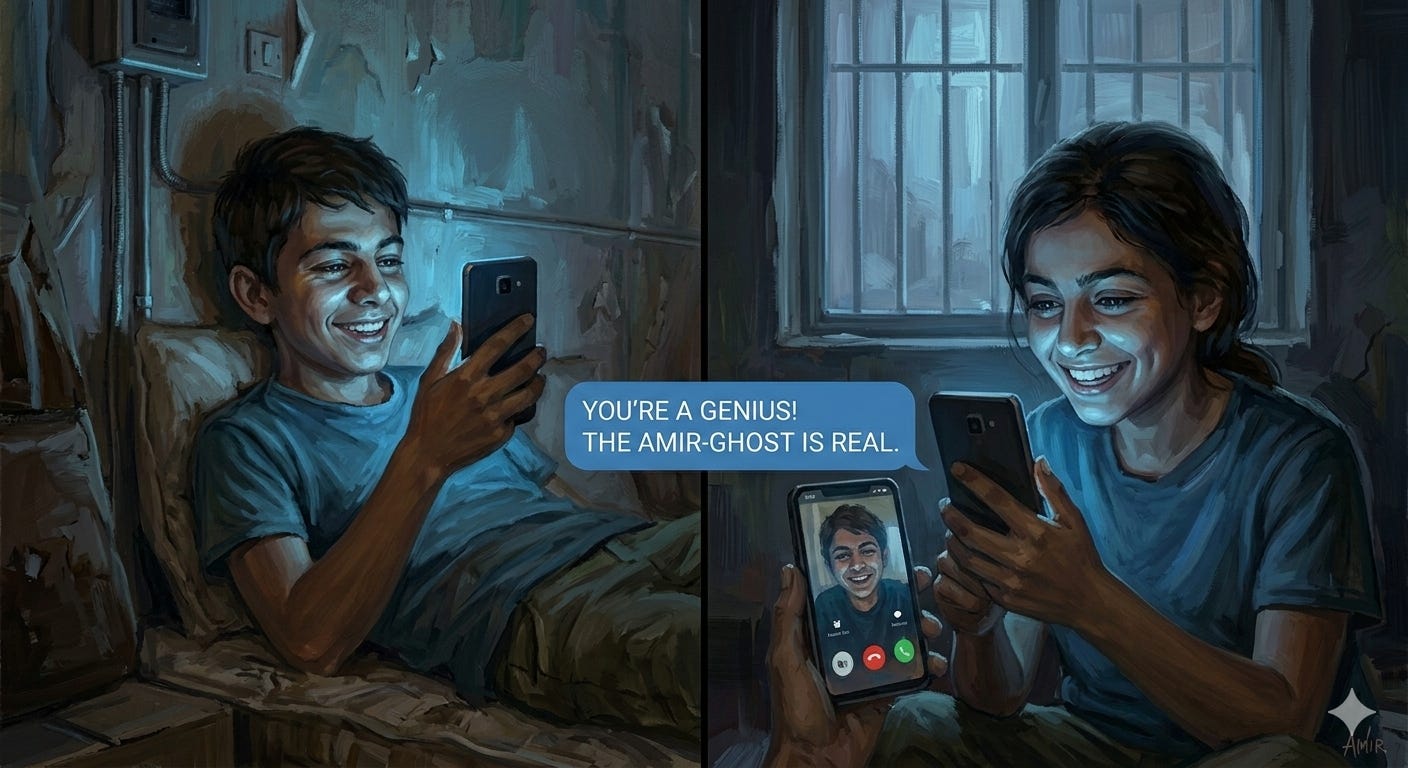
Then he messaged his American cousin, Ryan. Delivered.
They jumped into a private Warzone lobby. Amir’s ping bounced between 220–480 ms—unplayable for most, but he could still drop in, hide in a corner, and snipe. Ryan carried him. “You’re a rusty, Lag ghost. But alive. That’s a W.”
After two matches Amir switched to Discord text chat. He noticed something: the connection dipped every few minutes—packet loss spikes to 60–70% for 3–5 seconds—then snapped back. Like the regime was sweeping the neighborhood with a jammer truck, but the dish kept finding a clean beam.
He opened the Starlink app’s debug tab (he’d memorized the hidden menu path months ago). New firmware: v2026.03.02-lowbw-global. No changelog. Just… there.
He googled the version (Google loaded—slowly). Nothing. No forum posts. No Reddit threads. Either he was first, or everyone else was staying quiet.
Curiosity won. He opened VS Code on his laptop and started messing around. Nothing dangerous—just a little script to watch the connection and nag the dish if it started dying.
He sketched this on a notepad first (he wasn’t dumb enough to save real code on the laptop yet):
text
// Amir's "Don't Die on Me" Watchdog (toy version, don't run this lol)
while true:
    if ping_google() > 800 or packet_loss() > 50:
        print("Jammer hitting! Forcing dish to hunt new satellite...")
        // pretend: tell router to re-lock beam
        run_fake_command("starlink force_reacquire")
        wait 15 seconds
    else:
        print("Stable! Latency: " + get_latency() + " ms")
    sleep 10 seconds
He tested it in a sandbox (disconnected from the dish). It spat fake alerts and “re-acquire” messages. Felt good. Like he had some control.
Then he did the dumb thing: shared it.
He created a throwaway Pastebin titled “Lag Zero Survival Tips (If Your Dish Wakes Up)”. No names. No location. Just:
Check at 3–5 a.m. — quieter time, less jamming.
If it connects slow, wait. It might stabilize.
Share Wi-Fi with neighbors quietly (hidden SSID, WPA3).
Run a simple loop to watch latency and kick the dish if it chokes.
Don’t upload videos or big files—save bandwidth for texts/photos.
Tell your mom you’re okay.
He sent the link to Ryan: “If anyone asks how I got online… maybe this helps. Don’t make it weird.”
Ryan: “You’re gonna be famous in Tehran and you don’t even know it.”
Amir shut the laptop. The dish was still humming on the roof. He lay back on the mattress and stared at the ceiling crack that looked like a map of old Persia.
For the first time in years, he felt like tomorrow might not suck quite as much.
Layla has said she loved him. So he was as content a young man could be.
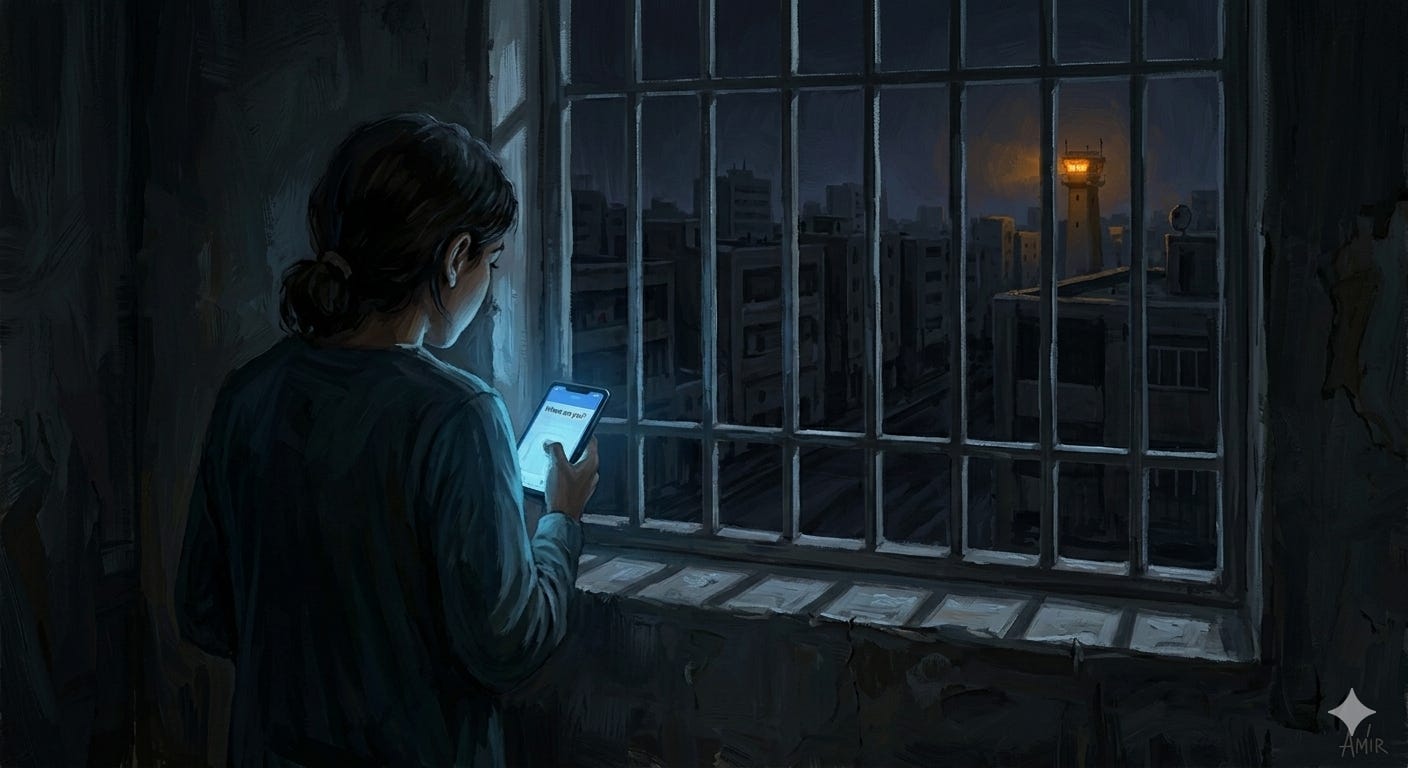
He couldn’t sleep.
Another script idea: one that auto-shared Wi-Fi from his router to neighbors via a hidden SSID.
One that bounced traffic through mesh apps if the dish dropped.
One that auto-downloaded news torrents when bandwidth spiked.
He didn’t call it a rebellion plan. He called it “Lag Zero.”
He posted the stories on a throwaway Pastebin link, then shared it in one private chat. “If your dish wakes up too... here’s what I did.”
The sun was coming up by the time he was done and so he went to bed.
The bombs were falling in the distance, the whole world could feel the dull thump…
It was only a matter of time.
Amir sent anonymous links. “Tell them to keep it quiet.”
He didn’t know if the connection would last.
He didn’t know if the regime would find his dish.
But for now, the lag was zero.
And that was enough.
He had started the fire.